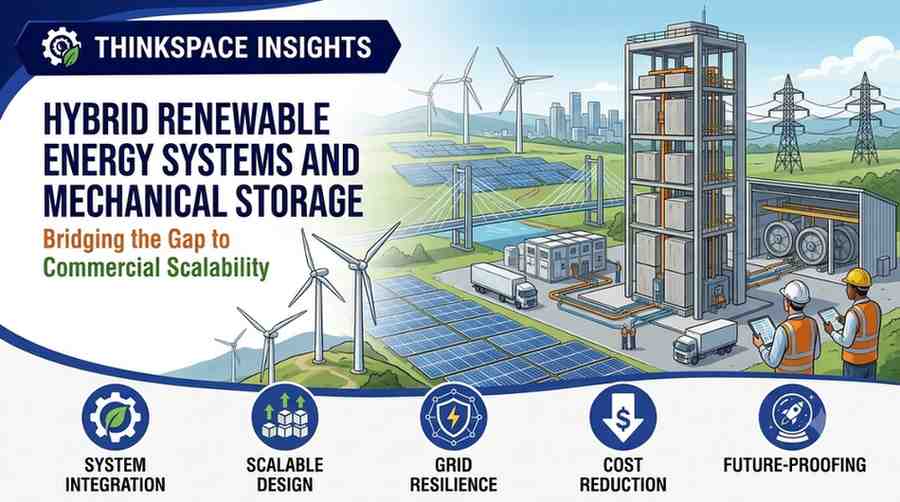

Hybrid Renewable Energy Systems (HRES) have rapidly gained global traction as a highly effective approach to mitigating the inherent variability and intermittency issues plaguing standalone renewable technologies like wind and solar. By combining multiple energy sources, hybrid systems offer a more stable grid output. However, to maximize their utility, coupling these systems with robust storage options is essential. Integrating HRES with Mechanical Energy Storage Systems (MESS) represents a powerful pathway toward drastically enhancing energy reliability and securing long-term grid sustainability.
A comprehensive review by researchers Montaser Mahmoud, Ohood H.K. Adhari, Enas Taha Sayed, Mohammad Ali Abdelkareem, and Abdul Ghani Olabi delivers a timely assessment of recent advancements in HRES-MESS integration. Published in Results in Engineering, the study systematically examines the foundational building blocks of these integrated setups, detailing key system configurations, prominent storage technologies, and essential control strategies.
Despite the clear operational benefits, the widespread adoption of mechanical storage is hindered by complex trade-offs. The authors dive deep into the primary technical, economic, and environmental bottlenecks that continue to slow down MESS deployment. Chief among these challenges are high initial capital costs, thermodynamic conversion inefficiencies, localized ecological impacts, and rigid, site-specific geographical limitations that restrict where these massive mechanical facilities can be built.
Ultimately, the study highlights a critical evolutionary gap in the market. While a handful of established MESS technologies are actively deployed in real-world commercial applications, a vast wave of promising innovations and performance-boosting configurations remain confined to laboratory settings or small-scale demonstration pilots. The researchers emphasize that targeted, focused development efforts are urgently required to accelerate the transition of these lab-stage breakthroughs into full-scale implementations, allowing mechanical storage to compete effectively against mature battery technologies in the commercial hybrid energy landscape.
ThinkSpace Insights
Search Full Article via: https://doi.org/10.1016/j.rineng.2026.108994