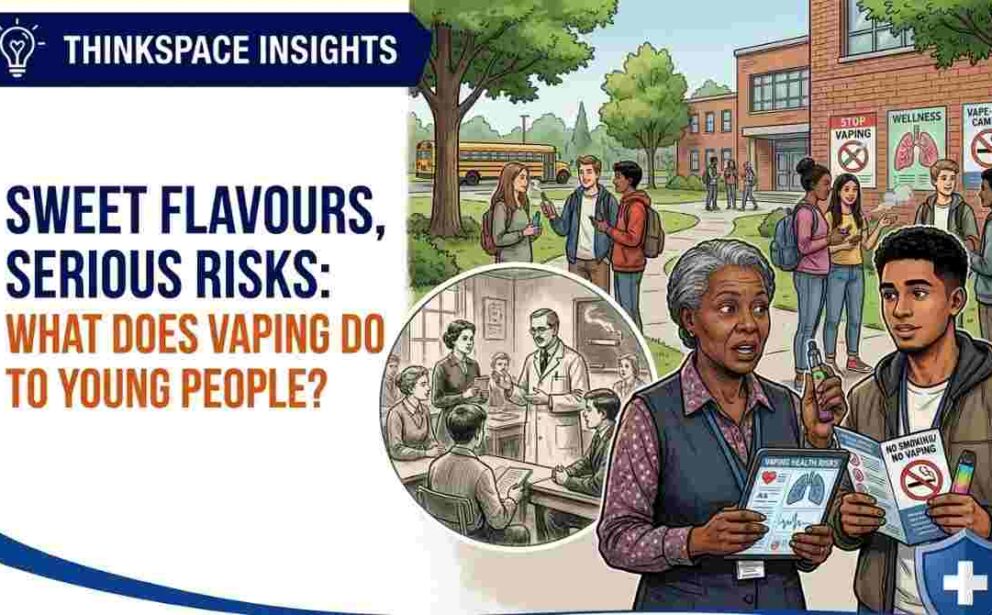
As vaping continues to surge in popularity among young demographics, understanding its true physical and social toll has become an urgent public health priority. To address this, a comprehensive systematic review led by Paula Oyella, Dr. Will Carroll, and their research team sought to rigorously identify and evaluate the specific health and social impacts of e-cigarette use across children and young people (CYP). By consolidating global data, the research provides a clear, evidence-based picture of how this rapidly growing phenomenon is actively affecting the next generation.
To build a highly robust dataset, the investigators conducted a continuous review of published literature spanning from database inception through September 2025. The initial sweep was massive, screening a total of 14,026 articles before closely assessing 325 full-text articles for strict eligibility. Ultimately, 81 primary research studies met the stringent inclusion criteria. These selected studies specifically focused on CYP aged 0 to 19 years and successfully reported measurable health or social outcomes directly associated with vaping exposure
The scale of the included research lends significant statistical weight to the findings, with sample sizes ranging from focused cohorts of 83 individuals to massive population studies encompassing up to 216,056 young people. While the majority of the data centered on adolescents aged 12 to 19, the review notably incorporated findings on much younger demographics, including children under five and neonatal outcomes following in-utero exposure. Across this vast pool of data, the researchers extracted clear evidence of harm spanning eight distinct domains: respiratory health, mental health, cigarette smoking initiation, oral and dental health, allergies, sleep, ocular symptoms, and perinatal outcomes.
The most consistent associations for harm were identified within large cross-sectional studies, which frequently linked vaping to significant respiratory and psychological distress. These studies commonly reported elevated rates of cough, wheeze, and bronchitic symptoms, alongside marked increases in anxiety, depression, and panic disorder among users. Furthermore, limited but high-quality age-stratified analyses revealed a deeply concerning demographic trend: the associations linking vaping to traditional smoking initiation and severe mental health symptoms appear to be notably stronger in younger adolescents compared to their older peers.
Ultimately, the systematic review unequivocally demonstrates that vaping carries significant short- and medium-term adverse health consequences for children and young people. While the long-term biological consequences remain a critical unknown due to the relatively recent emergence of e-cigarettes, the currently available evidence is highly alarming. The authors conclude that these documented harms necessitate immediate legislative action, firmly indicating that a substantially stronger legal framework is urgently required in the UK and globally to protect vulnerable youth from further health degradation.
ThinkSpace Insights
- A massive evidence base, with the systematic review synthesizing 81 primary research studies that encompass sample sizes of up to 216,056 children and young people.
- Eight domains of harm, revealing that vaping negatively impacts respiratory health, mental health, oral health, allergies, sleep, ocular symptoms, perinatal outcomes, and smoking initiation.
- Mental and respiratory distress are consistent, with large studies repeatedly linking e-cigarette use to chronic cough, wheeze, anxiety, depression, and panic disorders.
- Younger teens are highly vulnerable, as high-quality age-stratified data indicates that younger adolescents face stronger associations for smoking transition and mental health symptoms.
- In-utero risks exist, with the data confirming that the negative impacts of vaping extend to perinatal and infant outcomes for babies exposed during pregnancy.
- Stricter laws are urgently needed, prompting researchers to call for a robust legal framework in the UK and beyond to shield children from these proven short- and medium-term harms.
Access Full Article
https://adc.bmj.com/content/early/2026/07/31/archdischild-2025-330125.abstract