
Cholera continues to pose a serious public health threat in Nigeria, with recurring outbreaks affecting thousands of people across vulnerable communities every year. While poor water and sanitation systems have long been recognized as major drivers of cholera transmission, a recent study published in the Journal of Water and Health reveals how conflict and climate change are increasingly worsening the crisis.
The study by Bashar Haruna Gulumbe and colleagues examines how insecurity, displacement, flooding, drought, and weak public health systems interact to create conditions that allow cholera outbreaks to spread rapidly across Nigeria.
Using a narrative review of published studies and reports, the researchers explored the relationship between conflict, climate variability, and cholera transmission. The findings suggest that cholera outbreaks are not caused by a single factor, but rather by the combined impact of environmental shocks, humanitarian crises, and inadequate infrastructure.
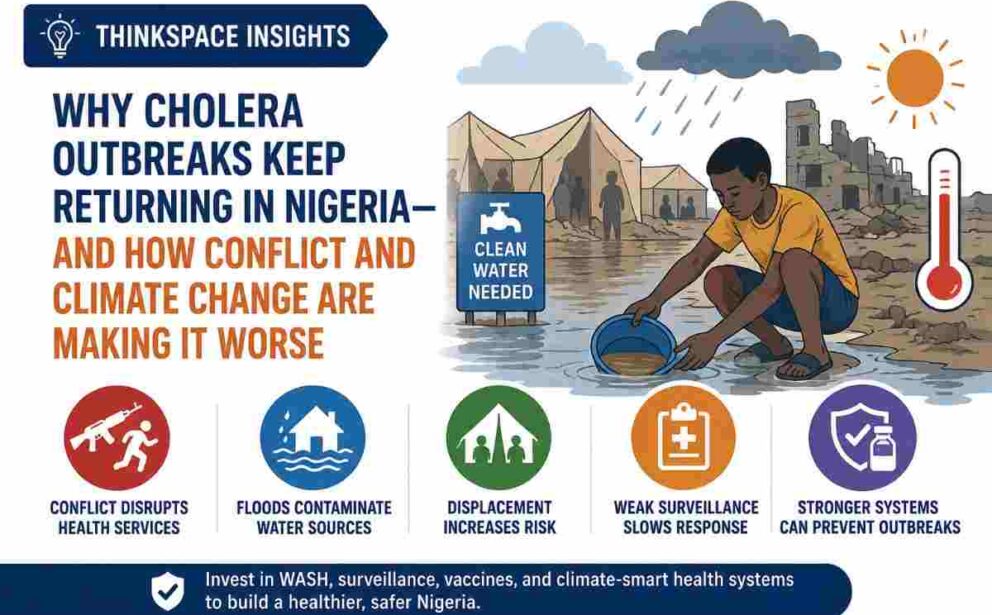
One of the study’s major findings is that armed conflict significantly increases cholera risk by disrupting essential health and sanitation services. In conflict-affected areas, population displacement often forces people into overcrowded internally displaced persons (IDP) camps where access to clean water, sanitation facilities, and healthcare services is limited.
The breakdown of water, sanitation, and hygiene (WASH) systems in these settings creates ideal conditions for cholera transmission. The study also found that insecurity weakens disease surveillance systems, making outbreaks harder to detect and control quickly.
Climate change and extreme weather events were also identified as major contributors to recurrent cholera outbreaks. Heavy rainfall and flooding frequently contaminate water sources and damage sanitation infrastructure, increasing exposure to Vibrio cholerea,the bacterium responsible for cholera.
At the same time, drought conditions can force communities to rely on unsafe water sources, further increasing infection risk. The interaction between climate shocks and fragile public health systems creates ongoing vulnerability in many Nigerian communities.
The researchers highlight that the combined effects of insecurity and climate-related disasters are especially severe in flood-prone communities and IDP camps, where outbreaks can spread rapidly due to overcrowding, poor sanitation, and limited healthcare access.
Importantly, the study argues that cholera prevention strategies must move beyond emergency response alone. Instead, Nigeria requires long-term, conflict-sensitive, and climate-adaptive public health interventions that address the structural drivers of disease outbreaks.
The researchers recommend strengthening WASH infrastructure, improving early warning systems and disease surveillance, pre-positioning oral cholera vaccines and outbreak response supplies, and developing coordinated emergency response plans for high-risk regions.
The findings also reinforce the growing connection between climate change, humanitarian crises, and infectious disease outbreaks across vulnerable regions globally.
ThinkSpace Insights
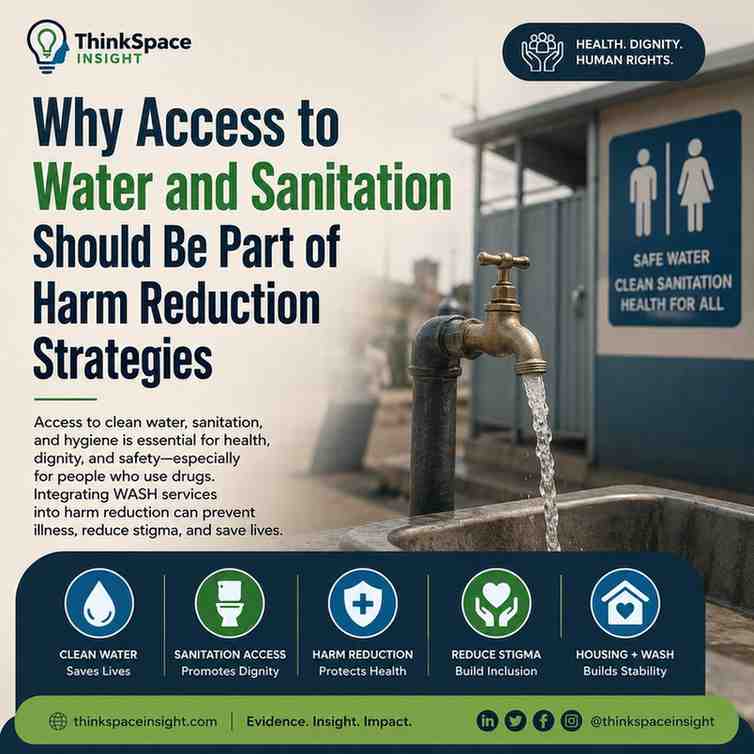
- Strengthen Water, Sanitation, and Hygiene Infrastructure- Governments and humanitarian agencies should invest in reliable clean water systems, sanitation services, and hygiene programs, particularly in conflict-affected and flood-prone communities.
- Improve Disease Surveillance and Early Warning Systems– Nigeria’s public health systems should strengthen outbreak monitoring and rapid response mechanisms to detect and contain cholera outbreaks earlier.
- Integrate Climate Adaptation into Public Health Planning– Climate resilience strategies should be incorporated into healthcare and emergency preparedness planning to reduce the impact of flooding, drought, and environmental disasters on disease transmission.
- Protect Vulnerable Populations in Displacement Settings- Internally displaced persons camps and conflict-affected communities require targeted healthcare interventions, vaccination campaigns, and improved living conditions to reduce outbreak risks.
The study ultimately highlights how health crises such as cholera are increasingly shaped by broader social, political, and environmental challenges. Addressing recurrent outbreaks in Nigeria will require coordinated action across public health, climate adaptation, humanitarian response, and infrastructure development.
Read Abstract via:https://doi.org/10.2166/wh.2026.368