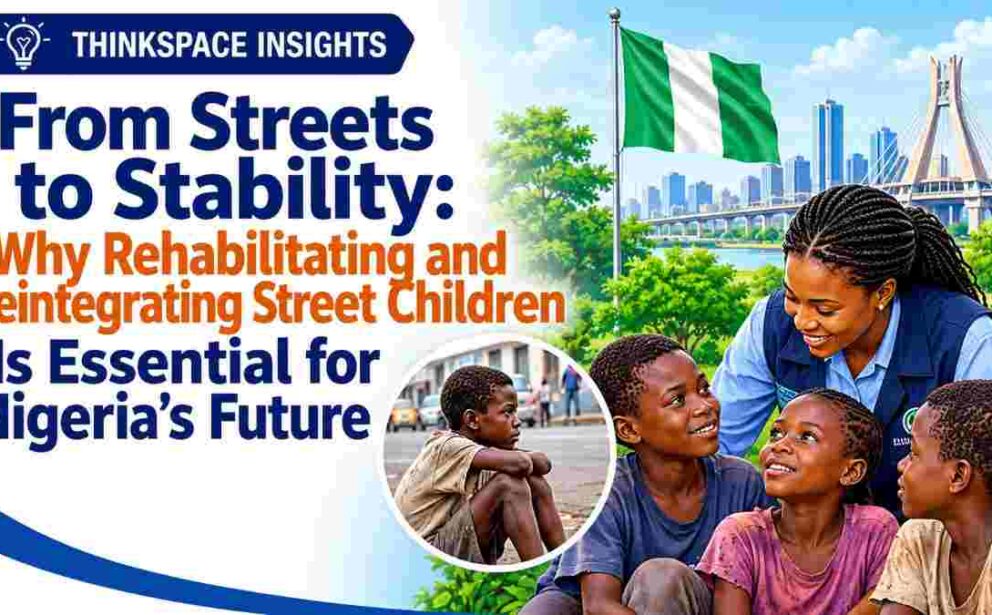
Across Nigeria, many children experience street life as a result of poverty, family instability, abuse, neglect, and limited access to education and social protection. For these children, the streets often become places of survival, exposing them to exploitation, violence, poor health, and uncertain futures.
However, addressing street-connectedness requires more than providing temporary shelter or removing children from the streets. It demands comprehensive interventions that address the underlying causes of their vulnerability while creating opportunities for safety, education, personal development, and sustainable reintegration.
A 2026 book chapter by Oyewale I. Oyeleye, Akeem A. Ajayi, and Oluwabusiwa T. Akinlolu, published in Nigeria’s street children, examines the rehabilitation and reintegration of street children in Nigeria. It explores the socio-economic and structural factors driving children into street life, alongside the intervention strategies and institutional frameworks needed to support their recovery and reintegration.
Drawing on national and international experiences, the chapter examines different intervention models, including government-led programmes, non-governmental organisations (NGOs), community-based initiatives, and faith-based programmes.
The authors emphasise the importance of holistic rehabilitation approaches that combine shelter, counselling, education, vocational training, and family reunification. These interventions are essential in addressing children’s immediate needs while equipping them with the support and opportunities required to rebuild their lives.
Despite these efforts, the chapter identifies several challenges that limit the effectiveness of rehabilitation programmes. These include inadequate funding, fragmented coordination among service providers, social stigma, and limited long-term monitoring of children after rehabilitation.
Comparative experiences from Kenya, Uganda, South Africa, India, and Brazil further highlight the importance of community involvement and rights-based approaches in developing sustainable reintegration pathways.
Ultimately, the chapter argues that rehabilitating street children should not be treated as a temporary welfare intervention. Strengthening child protection systems, improving institutional partnerships, and establishing sustainable reintegration programmes are essential to ensuring that children can live safely, develop their potential, and participate meaningfully in society.
ThinkSpace Insights
Beyond street survival, highlighting the socio-economic and structural factors that push children into street life in Nigeria. Addressing poverty, family instability, abuse, neglect, and inadequate social protection is essential to preventing and reducing children’s vulnerability.
Rehabilitation must go beyond shelter, emphasising that temporary accommodation alone cannot address the complex needs of street-connected children. Effective interventions should combine protection, counselling, education, vocational training, and appropriate family support.
The importance of family and community reintegration, exploring how safe family reunification and community-based support can help children rebuild relationships, regain a sense of belonging, and establish more stable lives.
The funding and coordination gap, drawing attention to inadequate funding, fragmented institutional responsibilities, social stigma, and limited long-term monitoring as major barriers to successful rehabilitation and reintegration programmes.
Lessons from global experiences, examining insights from Kenya, Uganda, South Africa, India, and Brazil, particularly the value of community involvement, coordinated interventions, and rights-based child protection frameworks.
Child protection requires stronger partnerships, emphasising the need for governments, NGOs, community organisations, and faith-based institutions to work together in delivering coordinated and sustainable rehabilitation services.
Reintegration is a long-term commitment, highlighting that successful rehabilitation should not end when a child leaves a shelter or intervention centre. Continuous monitoring, family support, educational opportunities, and community acceptance are necessary to support lasting reintegration.
Investing in children is investing in Nigeria’s future, recognising that protecting and rehabilitating street children is not only a moral responsibility but also an important investment in human capital, social inclusion, and national development.
Every child deserves an opportunity to grow up in a safe, supportive, and enabling environment. Addressing street-connectedness in Nigeria requires more than short-term interventions; it calls for sustainable systems that protect children, address the root causes of vulnerability, and create meaningful pathways to reintegration.
By strengthening child protection institutions, improving collaboration, and investing in holistic rehabilitation programmes, Nigeria can move closer to ensuring that children living on the streets are not defined by their circumstances but supported to build better futures.
Access Full article:https://www.taylorfrancis.com/chapters/edit/10.4324/9781003681397-28/streets-stability-oyewale-oyeleye-akeem-ajayi-oluwabusiwa-akinlolu