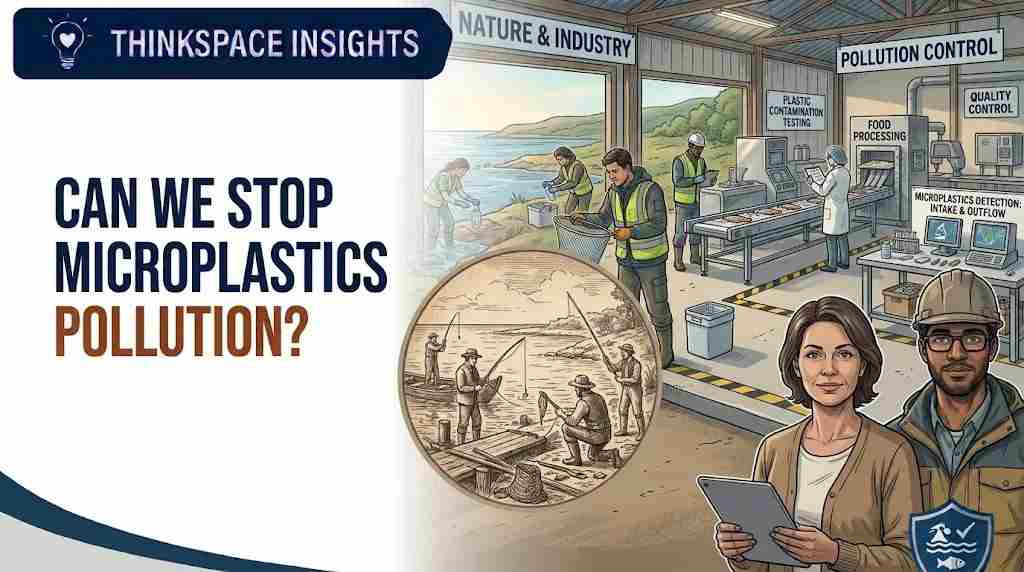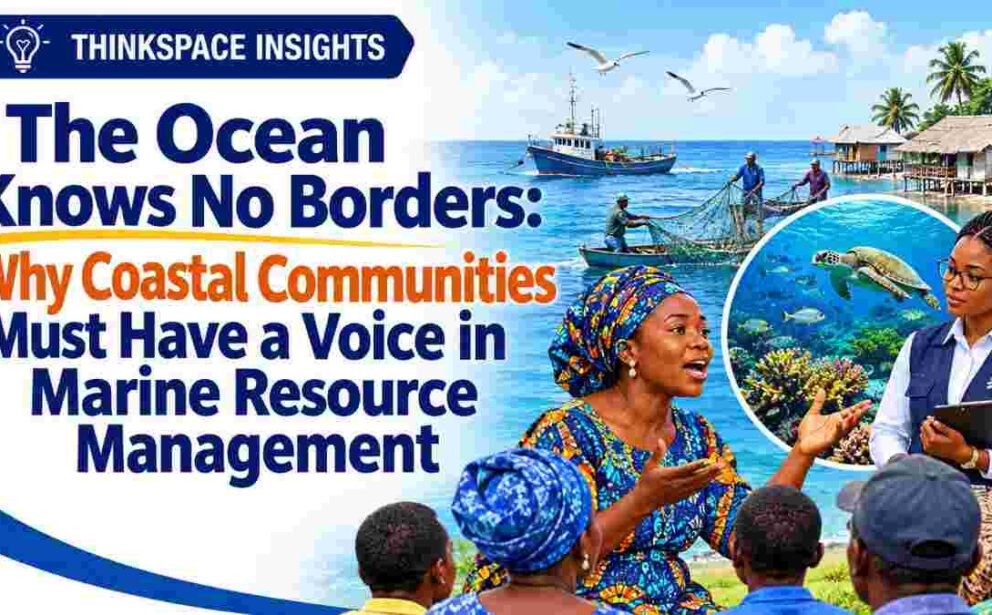
Marine ecosystems are among the most valuable natural resources on the planet, supporting food security, livelihoods, biodiversity, and economic development. Yet, these resources are increasingly threatened by climate change, pollution, habitat degradation, and unsustainable human activities. The challenge becomes even more complex when marine ecosystems extend across national boundaries, making their protection a shared responsibility.
Across Sub-Saharan Africa, coastal communities are at the centre of this environmental challenge. Their livelihoods depend heavily on healthy oceans, but they are not always adequately represented in decisions concerning the management of these shared resources.
To examine this issue, Ogunleye Oluwayemisi published a study in the Journal of Marine Resources and Coastal Management in 2026, exploring the critical role of coastal communities in transboundary marine resource management across selected Sub-Saharan African cities.
The research highlights how stronger community participation, indigenous knowledge, and regional cooperation can contribute to more sustainable marine governance.
The study focuses on five coastal cities: Lagos (Nigeria), Abidjan (Côte d’Ivoire), Accra (Ghana), Mombasa (Kenya), and Cape Town (South Africa). Using a systematic review of recent studies, reports, and policy documents, the researcher examines existing governance frameworks, environmental pressures, and the integration of indigenous and local knowledge (ILK) into the management of shared marine ecosystems.
Findings reveal that although regional conventions provide a legal foundation for cooperation between countries, weak enforcement, limited community participation, and socio-political inequalities continue to undermine effective transboundary governance.
Coastal communities are also experiencing increasing environmental pressures from climate change, marine pollution, and habitat degradation. These challenges threaten biodiversity, disrupt livelihoods, and weaken the resilience of communities that depend on marine resources.
Importantly, the research identifies the value of successful community-based management initiatives and highlights how local participation can strengthen environmental protection and improve the sustainability of shared marine ecosystems.
The study further emphasises the importance of indigenous and local knowledge in marine resource management. Coastal populations possess valuable knowledge of fishing practices, seasonal patterns, local ecosystems, and environmental changes. Integrating this knowledge with scientific research can support more inclusive and context-specific conservation strategies.
Ultimately, the research argues that effective marine resource management requires more than regional agreements and government policies. It demands meaningful stakeholder engagement, stronger institutional capacity, interdisciplinary research, and co-management approaches that recognise coastal communities as essential partners in protecting shared marine resources.
ThinkSpace Insights
The ocean knows no borders, highlighting the importance of regional cooperation in managing marine ecosystems, that extend across national boundaries. Environmental activities in one country can affect the livelihoods, biodiversity, and coastal environments of neighbouring countries.
The community participation gap, revealing that weak enforcement, limited community involvement, and socio-political inequalities continue to undermine effective transboundary marine governance, despite the existence of regional conventions and cooperation frameworks.
Five coastal cities, one shared challenge, examining marine resource management across Lagos, Abidjan, Accra, Mombasa, and Cape Town, where coastal communities face growing environmental pressures from climate change, pollution, and habitat degradation.
Indigenous knowledge as a conservation tool, emphasising how the traditional knowledge and experiences of coastal populations can complement scientific research in developing practical and locally relevant marine conservation strategies.
Community-based management builds resilience, highlighting the value of initiatives that involve local communities in protecting marine ecosystems, supporting sustainable resource use, and strengthening environmental stewardship.
A shared responsibility for sustainable oceans, underscoring the need for stronger stakeholder engagement, capacity building, regional collaboration, and co-management approaches that bring governments, researchers, policymakers, and coastal communities together.
Inclusive governance is essential, concluding that sustainable marine resource management cannot be achieved through policies and regional agreements alone. Coastal communities must have a meaningful voice in decisions affecting the resources on which their livelihoods depend.