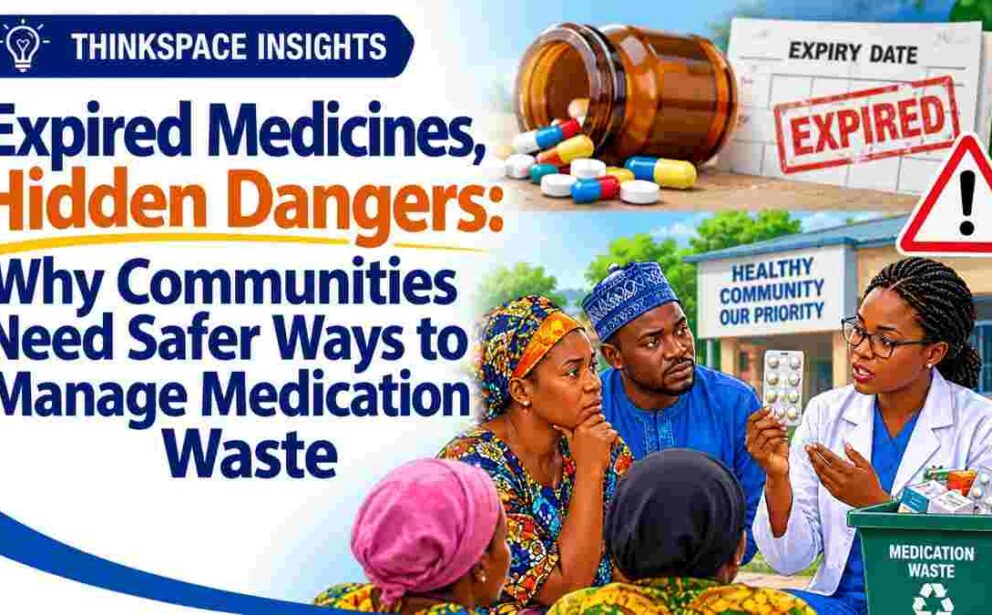
Unused and expired medications are often forgotten in household cabinets, drawers, and storage spaces. However, what appears to be harmless medication waste can pose serious risks to public health, environmental safety, and healthcare resource management when improperly stored or discarded. A recent study by Patranit Srijuntrapun and Kusawadee Maluangnon explores how communities can develop safer, more sustainable approaches to managing unused and expired medications through stakeholder collaboration and practical waste management guidelines.
The study highlights the growing challenge of pharmaceutical waste, particularly in communities where organized medication take-back programmes and formal disposal systems are unavailable. Improper disposal of medications can contribute to environmental pollution, expose individuals to accidental poisoning, and create risks associated with inappropriate medication use.
Using a mixed-methods research approach, the researchers surveyed 156 households to assess the quantity and economic value of unused and expired medications in their possession. They also conducted in-depth interviews with 45 participants, including healthcare professionals, community leaders, citizens, and policymakers. Additionally, focus group discussions involving 16 participants helped shape practical guidelines for community-based medication waste management.
The findings revealed that blood glucose-lowering medications were the most commonly retained unused medicines in households, while antihypertensive medications were the most frequently reported expired drugs. These findings highlight the need for better medication management practices, particularly among households that regularly purchase and use medicines for chronic health conditions.
Another important finding is that medication wastage does not occur only when medicines expire. It happens at different stages of the medication cycle, including purchasing, storage, prescription, dispensing, and disposal. This suggests that addressing pharmaceutical waste requires more than simply encouraging people to dispose of expired medicines properly. It also requires improving how medications are acquired, prescribed, stored, and used.
One of the study’s major contributions is the development of a practical seven-step community-based management framework guided by the waste hierarchy principle. The framework emphasizes a holistic approach to reducing medication waste, encouraging responsible consumption, improving medication management, and establishing safer disposal pathways even in communities without formal take-back programmes.
The researchers emphasize that effective medication waste management requires collaboration among healthcare professionals, households, community leaders, and policymakers. By involving these stakeholders in developing locally appropriate solutions, communities can establish more accessible and sustainable systems for managing pharmaceutical waste.
The study concludes that the proposed guidelines offer a practical model that can support policymakers and healthcare practitioners in reducing medication wastage, protecting the environment, and promoting responsible pharmaceutical consumption.
ThinkSpace Insights
1. Strengthen Community Awareness of Safe Medication Disposal
Public health agencies and healthcare professionals should educate households on the dangers of improper medication disposal and promote safe practices for handling unused and expired medicines.
2. Establish Community-Based Medication Collection Systems
Governments and healthcare institutions should explore accessible medication take-back programmes, particularly in communities where formal pharmaceutical waste disposal systems are unavailable.
3. Promote Responsible Prescription and Medication Use
Healthcare professionals should encourage appropriate prescribing, responsible purchasing, and proper medication storage to minimize unnecessary accumulation and wastage in households.
4. Encourage Stakeholder Collaboration
Policymakers, pharmacists, healthcare providers, community leaders, and citizens should work together to develop practical medication waste management strategies that reflect local needs and available resources.
5. Integrate Pharmaceutical Waste Management into Environmental Health Policies
Governments should strengthen policies addressing pharmaceutical waste, establish clear disposal guidelines, and promote sustainable practices that protect public health and the environment.
Read more about this article: https://doi.org/10.1371/journal.pone.0343225