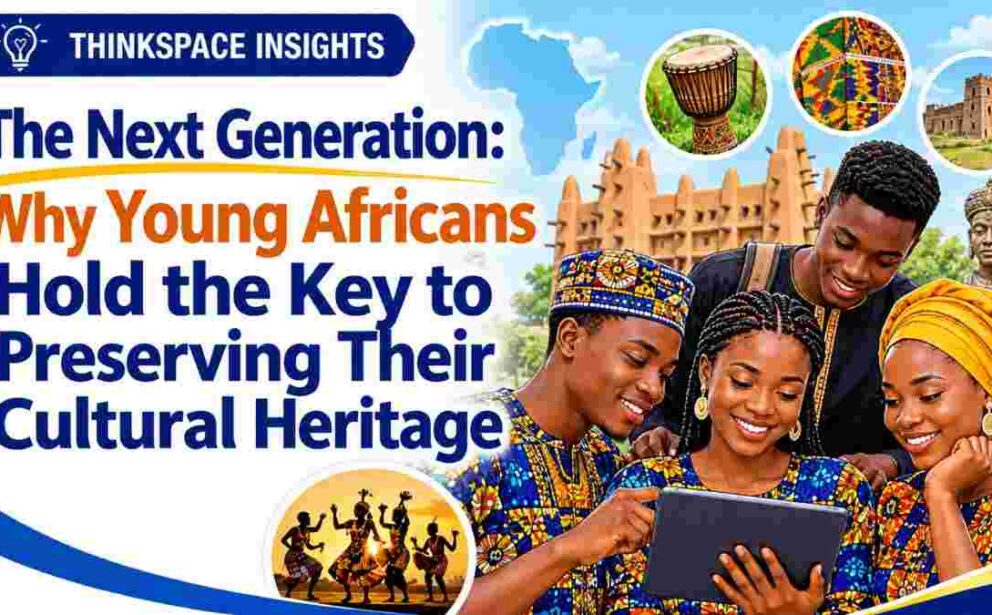
Africa’s cultural heritage is reflected in its languages, festivals, music, traditional practices, art, storytelling, and shared histories. These traditions carry the identities, values, and experiences of generations. Yet, in a world increasingly shaped by globalisation, digital technology, and changing lifestyles, many aspects of African heritage face the risk of being forgotten or gradually replaced.
As younger generations embrace global trends and modern ways of life, an important question emerges: how can Africa preserve its cultural identity while allowing its heritage to evolve with the times?
A 2026 book chapter by Abiodun Justin Adelodun, published in Preserving Identity and History With African Languages, explores the attitudes of young Africans towards their cultural heritage and examines their roles in preserving traditions in a rapidly changing world.
The chapter investigates the responsibilities, strategies, and contributions of young Africans in protecting cultural heritage from erosion. It places particular emphasis on intergenerational knowledge exchange and digital innovation as important tools for sustaining cultural identity.
Using a qualitative approach, the study draws on interviews and desk research guided by cultural transmission theory to understand how heritage is passed from one generation to another and how young people contribute to this process.
The findings reveal that young Africans are not simply passive recipients of cultural traditions. They are active custodians and innovators who can preserve, reinterpret, and promote their heritage in ways that connect with contemporary society.
The chapter highlights youth-led efforts to sustain African languages, festivals, music, art, and storytelling. These activities demonstrate how cultural preservation can take different forms, from learning indigenous languages and documenting traditional practices to using digital platforms to share cultural knowledge with wider audiences.
An important contribution of the research is its emphasis on combining tradition with technology. Digital platforms provide opportunities for young people to document endangered languages, preserve oral histories, promote cultural festivals, showcase traditional art, and connect African communities across geographical boundaries.
However, preserving heritage also requires meaningful engagement between generations. Elders possess valuable cultural knowledge, while younger people bring new ideas, technological skills, and innovative ways of communicating. Creating opportunities for these generations to learn from one another can strengthen cultural continuity.
Ultimately, the chapter advocates for a youth-driven cultural renaissance that brings together traditional knowledge and modern innovation. It argues that securing Africa’s cultural future requires young people to recognise their heritage not as something belonging only to the past, but as a living resource that deserves to be protected, celebrated, and passed on.
ThinkSpace Insights
Heritage is more than history, highlighting that African cultural heritage encompasses languages, festivals, music, art, storytelling, and traditional practices that shape collective identity and connect present generations with their past.
Young Africans as cultural custodians, revealing that young people are not merely inheritors of cultural traditions. They have an active responsibility and an important role in preserving, promoting, and adapting their heritage for future generations.
The intergenerational knowledge gap, emphasising the importance of knowledge exchange between older and younger generations. Elders can share traditional knowledge and lived experiences, while young people can introduce innovative ways of documenting and sustaining cultural practices.
Digital technology as a preservation tool, exploring how social media, digital archives, online storytelling, and other technological platforms can help document African languages, preserve oral histories, promote traditional art, and make cultural knowledge accessible to wider audiences.
Keeping African languages and traditions alive, drawing attention to the importance of sustaining indigenous languages, festivals, music, and storytelling as essential expressions of African identity and cultural continuity.
Tradition and innovation can coexist, highlighting how young Africans can embrace modern lifestyles and technological advancement without abandoning their cultural roots. Cultural preservation does not require rejecting change; it requires finding meaningful ways to carry heritage into the future.
A youth-driven cultural renaissance, emphasising the need to support young people’s initiatives, creativity, and participation in cultural preservation through education, community engagement, digital innovation, and cultural programmes.
Preserving identity for future generations, concluding that Africa’s cultural future depends on how effectively its heritage is documented, celebrated, transmitted, and adapted. Young Africans have an important role in ensuring that cultural identity remains relevant in an increasingly globalised world.
Africa’s heritage should not become a collection of memories that future generations can only read about. It should remain a living part of everyday life, expressed through language, creativity, traditions, and shared experiences.
By encouraging intergenerational learning and empowering young Africans to use technology creatively, the continent can protect its cultural identity while making its heritage relevant to a changing world.
Access Full Article:https://www.igi-global.com/chapter/the-next-generation/412037