
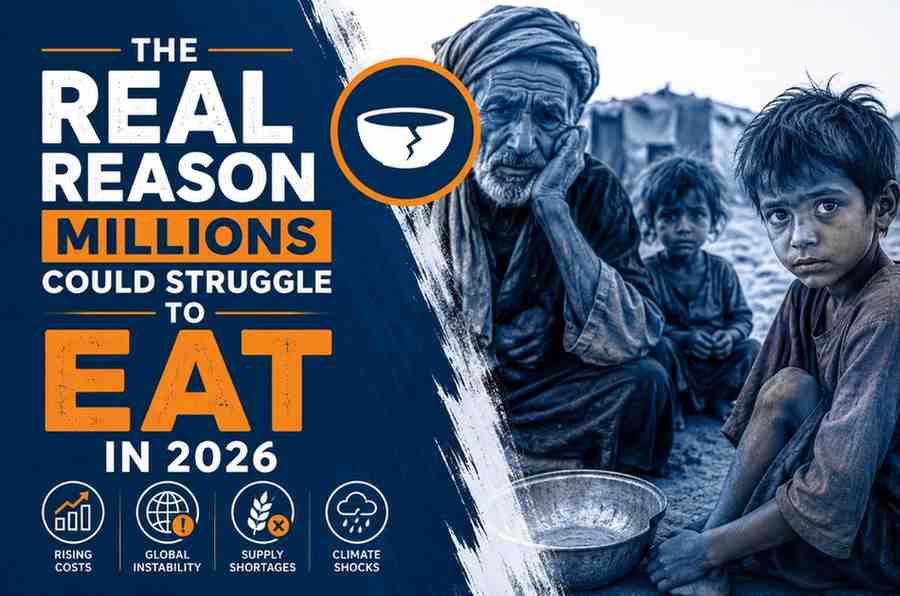
Climate change continues to threaten livelihoods and food systems across West Africa, despite the region contributing minimally to global industrial emissions. A recent study by Nyam Vivian Kaweng, Canice Esidene Erunke, and Aminu Ibrahim provides important insight into how climate instability is worsening food insecurity across Nigeria, Niger Republic, and Ghana.
The study investigated climate change and food security in West African states between 2016 and 2025 using a survey research design alongside mixed methods of data collection and analysis. To frame the research, the authors adopted Ludwig Von Bertalanffy’s Systems Theory and Modernization Theory to explain the interconnected relationship between environmental changes, governance systems, and agricultural productivity.
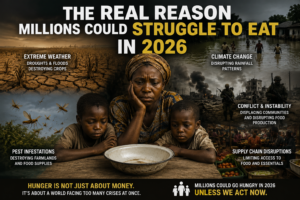
Findings from the study reveal that climate change is increasingly threatening food and water security in a region already facing conflict, fragility, and economic vulnerability. Researchers observed that changing environmental conditions are disrupting agricultural cycles and weakening the resilience of local food systems.
In Niger Republic, unpredictable weather conditions were found to have significantly reduced crop harvests. Irregular rainfall patterns, prolonged dry seasons, and unstable farming conditions continue to undermine food production and worsen rural hardship. The study also discovered that livestock production has been negatively affected by rising temperatures and advancing desertification, reducing grazing opportunities and increasing pressure on limited natural resources.
Beyond agricultural losses, the research highlights the wider social implications of climate change across West Africa. Food shortages, declining water availability, and environmental stress are contributing to insecurity and weakening livelihoods in communities already vulnerable to poverty and instability.
The study concludes that West African governments must adopt stronger and more coordinated environmental management strategies to protect agricultural systems and ensure long-term food security. Among its major recommendations is the implementation of the Integrated Coastal Zone Management (ICZM) approach to strengthen environmental governance and improve agricultural productivity across the region.
The researchers further urge the governments of Nigeria, Niger, and Ghana to intensify environmental restoration programmes capable of improving climate resilience and land sustainability. In addition, the study recommends that the Economic Community of West African States establish a Central State Agricultural Information System (C-SAIS) to support digital climate monitoring, land management, and early warning systems capable of detecting environmental threats before they severely disrupt agricultural production.
The study reinforces a growing reality confronting West Africa: climate change is no longer only an environmental issue. It is rapidly becoming a food security, economic, and human survival challenge requiring urgent regional cooperation and long-term policy commitment.
ThinkSpace Insights
- Climate change is rapidly evolving from an environmental concern into a major food security and economic stability challenge across West Africa, especially in vulnerable agricultural communities dependent on predictable rainfall patterns.
- Regional cooperation is now essential for effective climate adaptation. Shared environmental threats across Nigeria, Niger, and Ghana require coordinated agricultural planning, digital climate monitoring, and early warning systems beyond isolated national responses.
- Sustainable food production in West Africa will depend heavily on long-term investment in environmental restoration, climate-smart agriculture, water management, and policies that strengthen the resilience of farmers and rural livelihoods.
Read the full article via: http://ssaapublications.com/index.php/sjhspsr/article/view/917