Artificial Neural Networks (ANNs) are rapidly emerging as a powerful tool for solving complex, nonlinear problems in the agricultural sector. By simulating the structure and function of the human nervous system, these advanced models possess the unique ability to learn hierarchical features directly from data, processing information with remarkable efficiency.
A comprehensive review by Salvador Castillo-Girones, Sandra Munera, Marcelino Martínez-Sober, José Blasco, Sergio Cubero, and Juan Gómez-Sanchis explores the current landscape of this technology, detailing the “what, when, and why” of ANNs in agriculture. The article highlights how these models, despite requiring large amounts of training data, consistently demonstrate superior performance over conventional machine learning methods in extracting relevant features and building highly accurate predictive models.
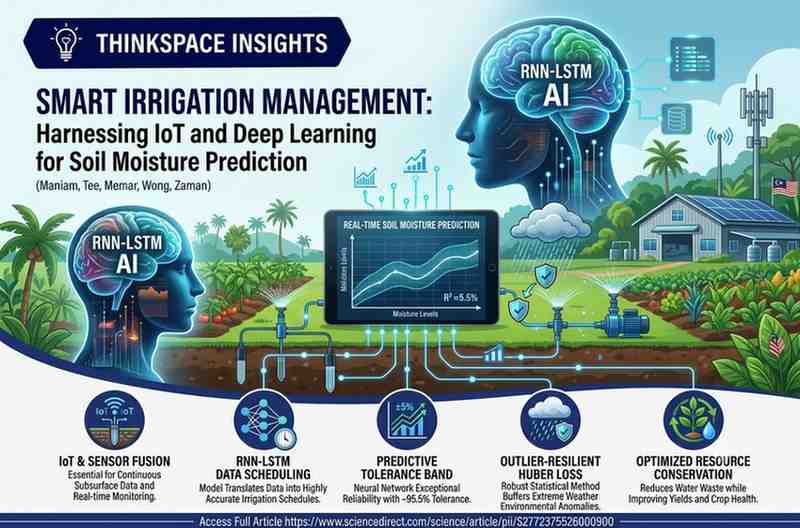
The versatility of ANNs is driving significant innovation across various agricultural domains. They are becoming foundational to precision agriculture, enabling accurate species classification, detailed plant phenotyping, and rigorous food quality and safety assessments. When combined with advanced image analysis, neural networks have proven exceptionally valuable for early disease detection and evaluating fruit quality in real-time. Unsurprisingly, the integration of deep learning in agriculture has experienced exponential growth, reflected by a surge in recent scientific applications.
Beyond highlighting these use cases, the article delves into the fundamental principles behind different types of agricultural data and their corresponding ANN models. The authors carefully outline both the benefits and the persistent challenges of implementing these systems in real-world agricultural scenarios.
Ultimately, the review serves as a practical guide for researchers and industry professionals. It offers valuable insights into the proper functioning of specific neural networks, strategies for data processing to improve model outcomes, and criteria for selecting the right model based on data type and functionality. By demystifying these core AI components, the study aims to equip the agricultural sector with the knowledge needed to harness the full potential of artificial intelligence.
ThinkSpace Insights
• Artificial Neural Networks simulate the human nervous system to efficiently solve complex, nonlinear challenges in modern farming.• Even with shallow architectures, ANNs frequently outperform conventional machine learning methods in feature extraction and model accuracy.• The integration of ANNs with image analysis is revolutionizing early disease detection, plant phenotyping, and fruit quality evaluation.• The application of deep learning in agriculture is growing exponentially, becoming a core pillar of precision agriculture and food safety protocols.• Successfully implementing AI in agriculture requires a thorough understanding of data processing, model selection, and the specific functionalities of various neural networks.• Equipping practitioners with practical guidelines on data utilization is essential for bridging the gap between theoretical AI models and real-world agricultural solutions.Access Full Article https://www.sciencedirect.com/science/article/pii/S0168169925000444