
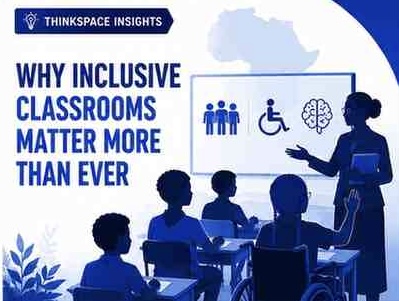
As classrooms become increasingly multicultural and multilingual, educators are under growing pressure to create learning environments that support every learner equally. A recent study by Jabulile Mzimela explores how culturally and linguistically inclusive teaching practices can help promote educational fairness, learner participation, and social equity in foundation phase classrooms in South Africa.
Published in Addressing Bias, Embracing Diversity, and Promoting Equity in Global Multicultural Education, the study highlights how inclusive classroom practices are not simply educational preferences, but essential strategies for reducing historical inequalities and improving learning outcomes for learners from diverse cultural and linguistic backgrounds.
Using Bernstein’s pedagogical practices as a theoretical framework, the study examined how foundation phase (FP) teachers create culturally and linguistically inclusive classroom environments during First Additional Language (FAL) learning. Five teachers from schools located in the Umlazi District in Durban, South Africa, participated in the qualitative interpretivist case study.
The findings suggest that inclusive pedagogical approaches can significantly improve learners’ cultural awareness, participation, and sense of belonging within the classroom. Teachers who intentionally acknowledged learners’ linguistic and cultural identities created more supportive and equitable learning spaces.
The study emphasizes that learners perform better academically and socially when their cultural backgrounds and home languages are respected within educational settings. Inclusive teaching practices helped reduce feelings of exclusion while encouraging confidence, classroom engagement, and mutual respect among learners.
Importantly, the research also highlights the continuing impact of historical educational inequalities in multicultural societies. Traditional classroom structures that prioritize dominant languages or cultural norms may unintentionally marginalize learners from minority backgrounds, limiting participation and educational achievement.
The participating teachers used several strategies to support inclusion, including:
The study argues that culturally responsive teaching is essential in increasingly globalized and diverse societies. Rather than treating diversity as a challenge, inclusive classrooms can transform cultural and linguistic differences into valuable educational resources that strengthen learning experiences for all students.
The findings also suggest that teacher attitudes and pedagogical choices play a central role in shaping learners’ experiences of fairness, belonging, and educational opportunity. Teachers who actively promote inclusion help foster social cohesion and educational equity from an early age.
ThinkSpace Insights
Read Abstract via: https://doi.org/10.4018/979-8-3693-9755-2.ch003