

Telemedicine has rapidly transformed the delivery of healthcare by improving accessibility, flexibility, and convenience for patients worldwide. However, as digital healthcare becomes increasingly common, researchers are beginning to ask an important question: what makes patients truly feel engaged and connected during virtual care?
A recent systematic review by Yangna Hu, Cindy Sing Bik Ngai, and Rui Jiang, published in the Journal of Medical Internet Research, explores how communication strategies influence patient engagement in telemedicine. The study highlights the growing importance of effective provider-patient communication in ensuring the success, quality, and sustainability of digital healthcare services.
The researchers conducted a comprehensive review of 34 peer-reviewed studies examining communication strategies used in telemedicine settings involving direct provider-patient interaction. Using data collected from six major databases, the study analyzed how communication affects patient engagement and how engagement itself is evaluated across telemedicine research.
The findings identified three major categories of communication strategies that improve patient engagement in telemedicine: interpersonal communication strategies, team-level communication strategies, and system-level communication strategies.
At the interpersonal level, the study found that relationship-building plays a central role in successful telemedicine interactions. Patients were more engaged when healthcare providers demonstrated empathy, active listening, professionalism, supportive attitudes, and personalized communication. Interactive dialogue and effective nonverbal communication, even through digital platforms, also strengthened patient trust and participation.
At the team level, communication strategies focused on healthcare coordination and preparation. Training healthcare professionals for virtual communication, improving teamwork among care providers, and addressing cultural and linguistic differences were identified as important factors influencing patient engagement.
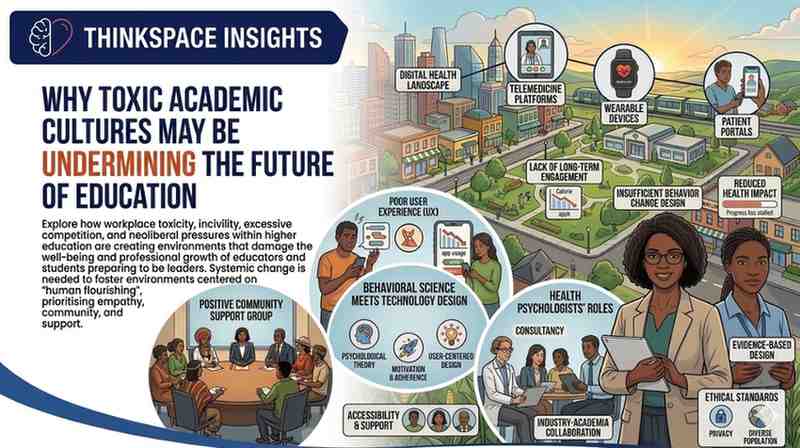
The study also emphasized the role of system-level communication strategies. Patients were more likely to remain engaged when telemedicine platforms were easy to use, provided clear and useful health information, and ensured strong privacy and data security protections. The findings suggest that technological design and user experience are just as important as provider communication in digital healthcare environments.
As telemedicine continues expanding globally, the study suggests that communication quality may become one of the most important determinants of successful healthcare delivery. Effective digital care requires more than technology alone — it also depends on empathy, clarity, coordination, inclusivity, and patient-centered design.
ThinkSpace Insights
1. Strengthen Communication Training for Telemedicine Providers
Healthcare professionals should receive specialized training in virtual communication skills, including active listening, empathy, digital professionalism, and culturally sensitive communication.
Read Abstract via https://www.jmir.org/2026/1/e85456