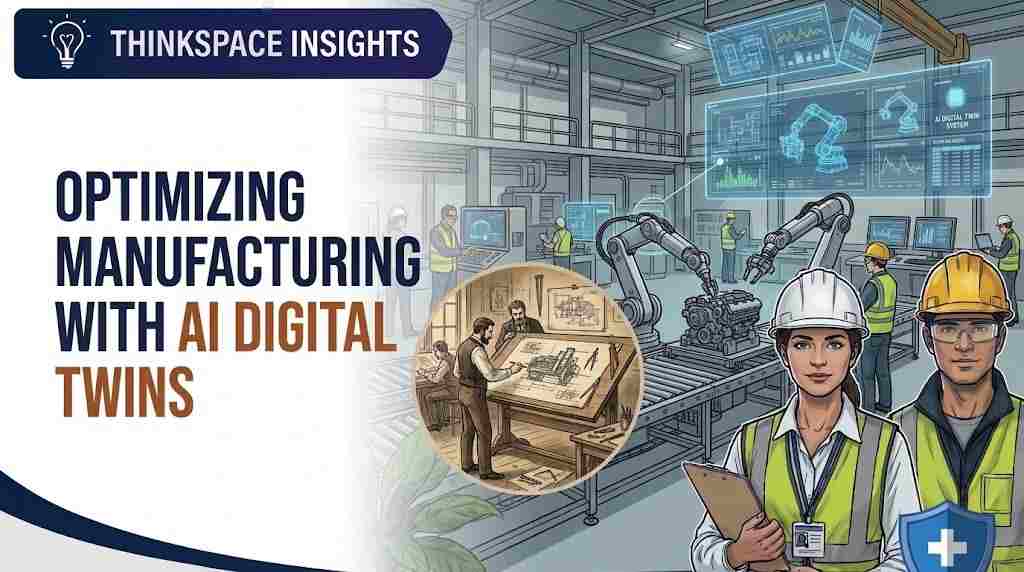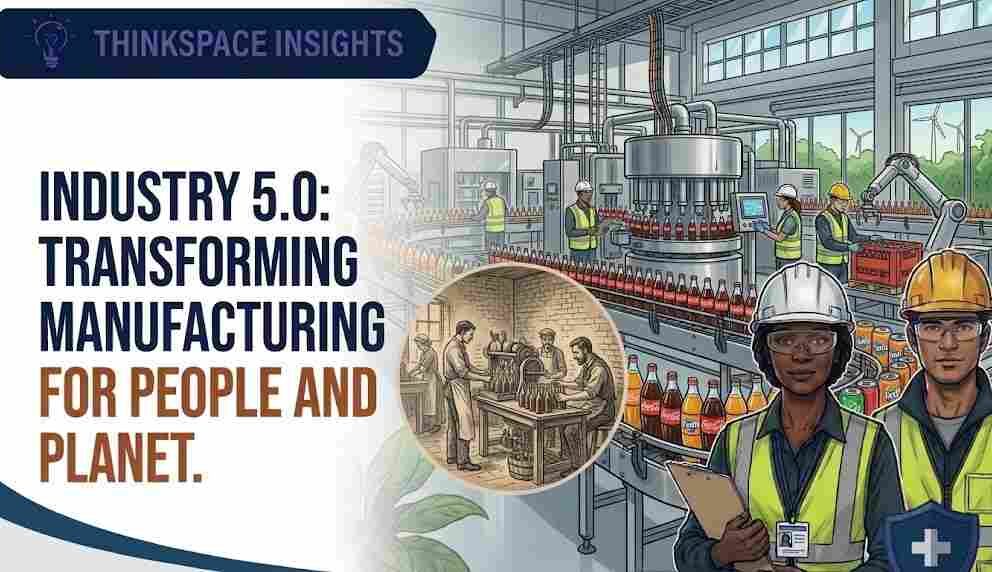
Imagine upgrading a factory’s engine to be infinitely faster, only to realize you forgot to install a steering wheel, safety belts, or an emissions filter. This is essentially what happened during the “Industry 4.0” revolution. While the era of smart manufacturing achieved remarkable gains in digital efficiency and automation, it was excessively “techno-centric,” aggressively prioritizing technological integration at the direct expense of worker well-being and environmental health. Now, the industrial world is attempting to correct this imbalance by transitioning to “Industry 5.0,” a new paradigm that explicitly elevates human-centricity, sustainability, and resilience to the same level as operational efficiency.
This paradigm shift places massive pressure on the traditional concept of “lean manufacturing”. Historically, lean manufacturing has been strictly committed to eliminating waste, optimizing processes, and enhancing immediate value. However, under the new demands of Industry 5.0, manufacturers can no longer rely on outdated, purely efficiency-driven models. The modern factory must now navigate complex new requirements, formulating innovative strategies to drastically reduce resource consumption and environmental pollution while simultaneously paying much more attention to employee skill improvement and career development.
To help industries navigate this overwhelming transition, a research team led by Chun-Yu Wu and De-Xuan Zhu developed a comprehensive strategic roadmap. Recognizing that the current exploration of Industry 5.0 is still in its preliminary, unsystematic stages, the researchers aimed to provide actionable guidance for achieving an Industry 5.0-driven lean manufacturing transformation. Through a rigorous content-centric literature review, combined with expert opinions and advanced analytical modeling—specifically Fuzzy Interpretive Structural Modeling (FISM) and MICMAC analysis—the team successfully identified and ranked the critical enablers of this massive industrial shift.
The study successfully identified 12 key enablers required for this industrial evolution, mapping out their hierarchical relationships and dependencies. The findings reveal that “government regulation and incentives” alongside “employee skill training” serve as the most foundational and critical enablers to trigger the transformation. Conversely, the models showed that establishing proper “value chain design and improvement” and managing “resource input and return” are the most complex, difficult-to-develop aspects of the new manufacturing ecosystem.
Implementing this new philosophy introduces immediate operational complications, as traditional lean practices often directly conflict with new sustainability goals. For example, the researchers highlight a major tension regarding the carbon footprint trade-off associated with frequent, small-batch transportation—a staple of traditional lean efficiency that actively harms the environment. To resolve these conflicts, the strategic roadmap emphasizes the crucial mediating role of “stakeholder participation and collaboration,” proving that industries must deeply embed sustainability assessments directly into their value chain design and technology governance to reconcile these competing interests.
Ultimately, simply updating old lean models with shiny new Industry 5.0 technologies is insufficient to address the evolving priorities of the modern world. This newly developed strategic roadmap offers a vital, practical guide for both manufacturers and policymakers to correctly sequence their investments and prioritize their actions. By systematically reinterpreting lean principles through the integrated lenses of human-centricity, sustainability, and resilience, the industrial sector can finally achieve an optimal, harmonious coexistence between manufacturing, society, and the environment.
ThinkSpace Insights
-
The Industry 4.0 flaw, highlighting that the previous wave of smart manufacturing was excessively techno-centric, prioritizing automation over worker empowerment and sustainability.
-
A new industrial paradigm, as Industry 5.0 explicitly elevates human-centricity, environmental sustainability, and resilience to the same level as operational efficiency.
-
Redefining lean manufacturing, noting that modern factories must urgently transition from simply eliminating waste to actively reducing resource consumption and pollution.
-
The critical enablers, with advanced modeling revealing that government regulations, incentives, and employee skill training are the most vital triggers for this transformation.
-
Resolving operational tensions, explaining that traditional lean practices, like frequent small-batch transport, often conflict with new sustainability goals and require careful value chain redesign.
-
A roadmap for the future, providing manufacturers and policymakers with a practical, step-by-step guide to correctly prioritize investments and sequence actions for the Industry 5.0 era.