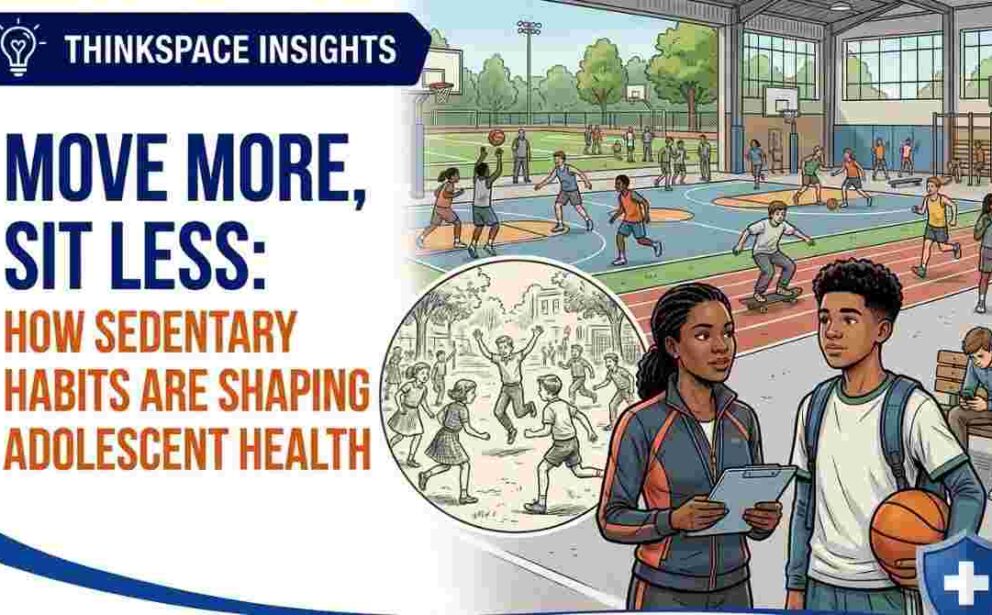
The teenage years represent a highly critical developmental window where participation in exercise directly shapes both immediate mental well-being and long-term physical health trajectories. Decisions made regarding daily movement during adolescence effectively program the body for adulthood, laying the foundation for either robust health or chronic vulnerability. To systematically understand this vital transition period, researchers Cong Kang and colleagues conducted a comprehensive narrative review analyzing the intricate links between physical activity, modern sedentary behavior, and overall adolescent health.
To construct this holistic overview, the research team performed a focused exploration across major scientific databases, including PubMed, Web of Science, and Scopus. By deliberately selecting significant observational, interventional, and mechanistic studies published between November 2014 and January 2026, they mapped a decade of modern public health data. Rather than just looking at basic activity levels, the researchers utilized a narrative method to examine the subtle nuances of exercise intensity, cultural context, and the fundamental physiological and psychosocial mechanisms that drive adolescent health outcomes.
The findings strongly validate the necessity of breaking a sweat, revealing that engaging in moderate to vigorous physical activity profoundly enhances both the physical and mental well-being of young people. The data highlights a highly specific psychological benefit to pushing physical limits: high-intensity workouts proved particularly effective for alleviating the heavy burdens of adolescent stress. By engaging in rigorous physical exertion, teenagers can actively trigger fundamental physiological mechanisms that buffer against the intense psychosocial pressures of modern youth.
Conversely, the review paints a concerning picture of modern inactivity. Extended periods of sitting and the excessive use of screens were found to act as independent risk factors, meaning they cause harm regardless of whether the teenager eventually exercises later in the day. This heavily sedentary lifestyle actively heightens the likelihood of developing obesity, experiencing severe mental health issues, and suffering from premature musculoskeletal discomfort. Importantly, these negative associations are not uniform; the data shows they are heavily influenced by external demographic factors, including gender, cultural context, and a family’s socioeconomic status.
Tackling this escalating public health crisis requires moving beyond generic “exercise more” public service announcements. The researchers conclude that promoting the best health outcomes for today’s youth demands a highly comprehensive, context-aware strategy based on solid, individualized evidence. By actively improving research methods to understand these fundamental processes and developing culturally customized approaches, policymakers and health professionals can effectively bridge the gap between clinical research and real-world practices, ultimately protecting the next generation from chronic disease.
ThinkSpace Insights
- Adolescence programs lifelong health, serving as the critical window where physical and mental habits shape long-term medical outcomes.
- Intensity matters for mental health, with the research proving that high-intensity workouts are uniquely effective at alleviating teenage stress.
- Sitting carries independent risks, demonstrating that prolonged screen time directly heightens the chances of obesity and musculoskeletal discomfort.
- Demographics dictate vulnerability, as the negative impacts of sedentary behavior are heavily influenced by gender, cultural background, and socioeconomic status.
- Moderate-to-vigorous activity is foundational, significantly enhancing both the physical conditioning and psychological well-being of teenagers.
- Customized interventions are required, emphasizing the need for context-aware public health strategies rather than one-size-fits-all recommendations.
Access Full Article
https://doi.org/10.3389/fpubh.2026.1809745
Adolescent Health, Physical Activity, Mental Health, Sedentary Behavior, Public Health, Preventive Medicine