Transforming the Soil: How Farm Mechanization is Reshaping Land Tenure Systems in Nigeria
The push for agricultural modernization in Nigeria, largely driven by the increasing adoption of mechanization, is fundamentally reshaping the nation’s production systems. While farm mechanization offers obvious advantages in terms of efficiency and output, it simultaneously introduces a web of complex socio-economic and institutional challenges. Specifically, the rapid introduction of heavy machinery intersects aggressively with […]

Artificial Intelligence in Smart Grids: Revolutionizing Demand-Side Management and Decentralized Security
In modern smart grids, demand-side management (DSM) plays an absolutely vital role in enhancing overall energy efficiency, balancing volatile supply and demand patterns, and effectively coordinating distributed energy resources. However, as power grids transition away from monolithic, centralized architectures toward distributed networks, conventional DSM approaches are falling short. They frequently lack the operational flexibility, multi-tier […]
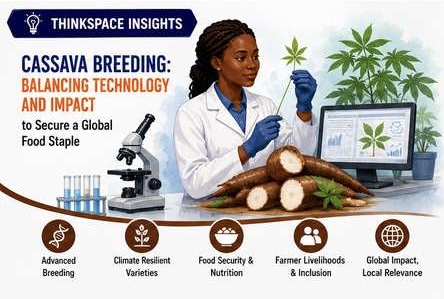
Cassava Breeding: Balancing Technology and Impact to Secure a Global Food Staple
Cassava is an extraordinarily resilient crop with immense geopolitical and economic significance. Across the African continent, it serves as a critical frontline staple ensuring food security for hundreds of millions, while in Southeast Asia, it functions as a highly competitive raw source for industrial starch production. Because both the roots and leaves of the plant […]

Hybrid Renewable Energy Systems and Mechanical Storage: Bridging the Gap to Commercial Scalability
Hybrid Renewable Energy Systems (HRES) have rapidly gained global traction as a highly effective approach to mitigating the inherent variability and intermittency issues plaguing standalone renewable technologies like wind and solar. By combining multiple energy sources, hybrid systems offer a more stable grid output. However, to maximize their utility, coupling these systems with robust storage […]
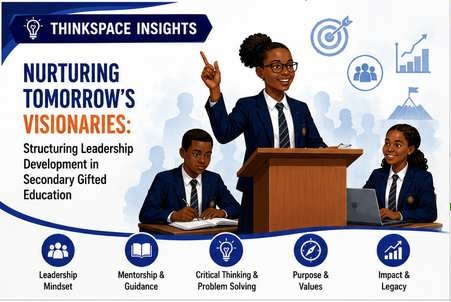
Nurturing Tomorrow’s Visionaries: Structuring Leadership Development in Secondary Gifted Education
Secondary gifted education programs have long operated under the assumption that advanced learners will naturally evolve into future leaders. However, the specific pedagogical mechanics of how to intentionally foster and scale these crucial leadership skills often remain ambiguous. A compelling book chapter by researchers Catherine A. Little and Kelly L. Kearney addresses this gap by […]